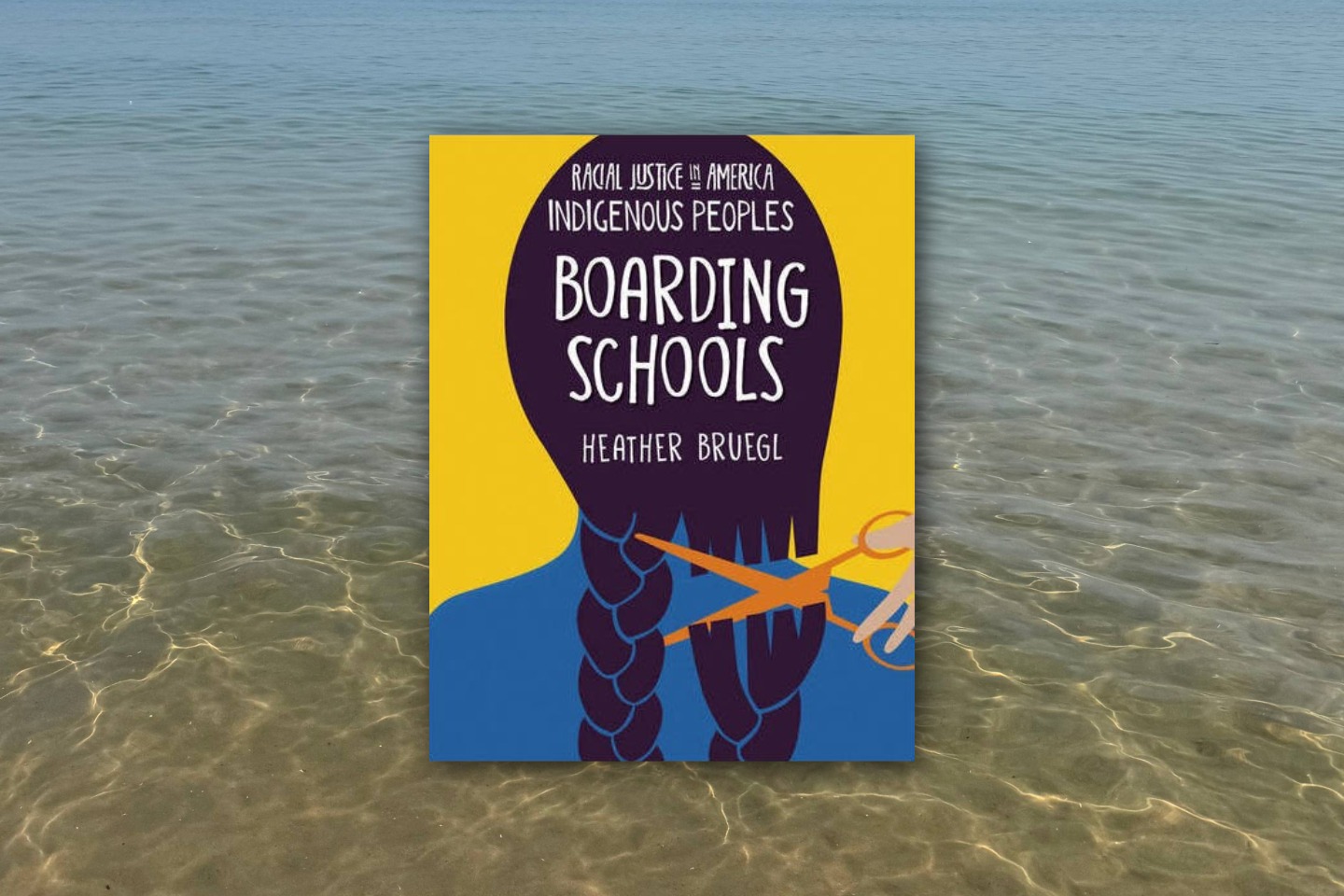
Boarding Schools (Racial Justice in America: Indigenous Peoples)
In this nonfiction book, interrogate the impact of boarding schools and how they have influenced generations of Indigenous families.
Themes:
Season:
About the Author and Honored Guest
Author and honored guest
Heather Bruegl
In the Munsee language, Heather’s name is Kiishookunkwe, meaning sunflower in full bloom.
Heather is a citizen of the Oneida Nation of Wisconsin and a first-line descendant of Stockbridge Munsee. She graduated from Madonna University in Michigan and holds a Master of Arts in U.S. History. She is a doctoral student at the University of Wisconsin-Green Bay in First Nations Education. Her dissertation research will focus on how museums and cultural institutions can support BIPOC workers doing the hard history. Heather is the former Director of Education at Forge Project and travels frequently to present on Indigenous history, including policy and activism.
Heather respectfully acknowledges that she works and resides on the unceded, traditional, and ancestral lands of the Three Fires Council – the Ojibwe, Odawa, and Potawatomi – along with the Peoria, Miami, and Wyandot. Through forced removal, these nations are now located throughout the United States including parts of Michigan, Wisconsin, Oklahoma, Kansas, and part of Canada.
Bio taken from Heather Bruegl’s website.
Discussion Questions
- How do you think the US Government moving Indigenous peoples to reservations encouraged the boarding schools?
- How do you think Indigenous communities and individuals resisted boarding schools?
- What stood out to you while reading about boarding schools? Is there anything you wish you knew more about?
Learning Activities
- Look up to see if there are any boarding schools near you, and look up their history.
- Look through the photos in the book, are there any details that stand out to you?
- Do some research and discuss how communities have attempted to heal from this trauma.
Explore More
- Read an article by Imprint News discussing the collection of oral histories of boarding school survivors.
- Explore education resources from the The National Native American Boarding School Healing Coalition.